Skip to content

How do we know? Because IPCC

  • Menu
    • Home
    • Donate (we’re a charity)
    • Praise for Because IPCC
    • Volunteer
    • About
    • Terms of Use – Privacy – Credits – Copyright – Contact
    • Because IPCC is a project of the Canadian charity Succession, charitable number 854745940RR0001

pg26

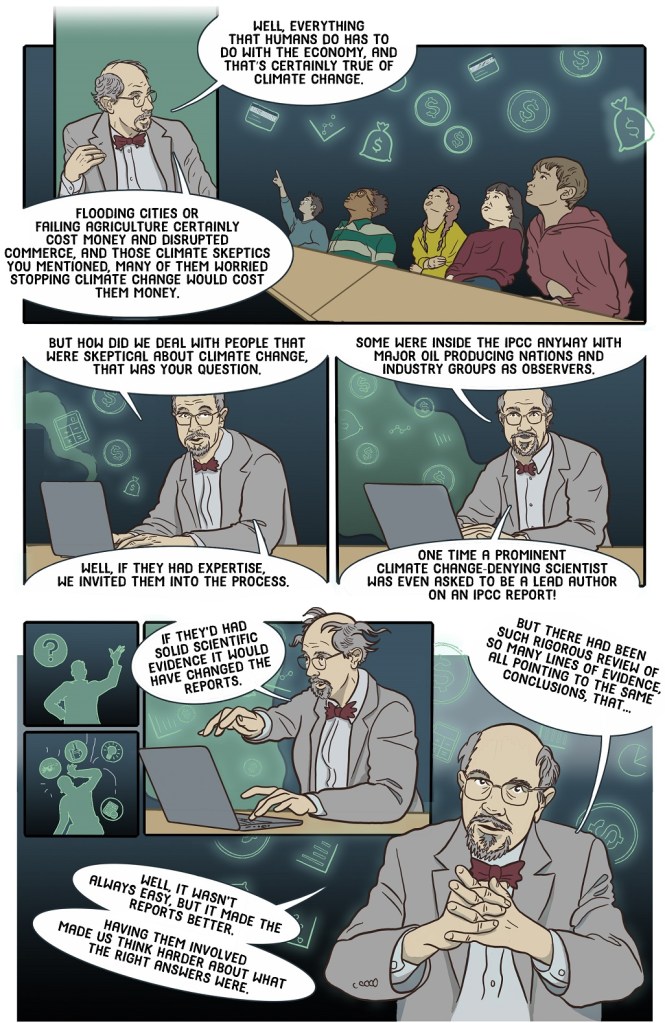
Twenty-fourth online page economist explaining how deniers were invited into the process and how that made the final conclusions even stronger.
Dialogue:
Well, everything that humans do has to do with the economy, and that’s certainly true of climate change.
Flooding cities or failing agriculture certainly cost money and disrupted commerce, and those climate skeptics you mentioned, many of them worried stopping climate change would cost them money.
But how did we deal with people that were skeptical about climate change, that was your question.
Well, if they had expertise, we invited them into the process.
Some were inside the IPCC anyway with major oil producing nations and industry groups as observers.
One time a prominent climate change denying scientist was even asked to be a lead author on an IPCC report.
If they’d had solid scientific evidence it would have changed the reports.
But there had been such rigorous review of so many lines of evidence, all pointing to the same conclusions, that…
Well, it wasn’t always easy. But it made the reports better.
Having them involved made us think harder about what the right answers were.
24 of 31
October 1, 2020October 29, 2021

pg27

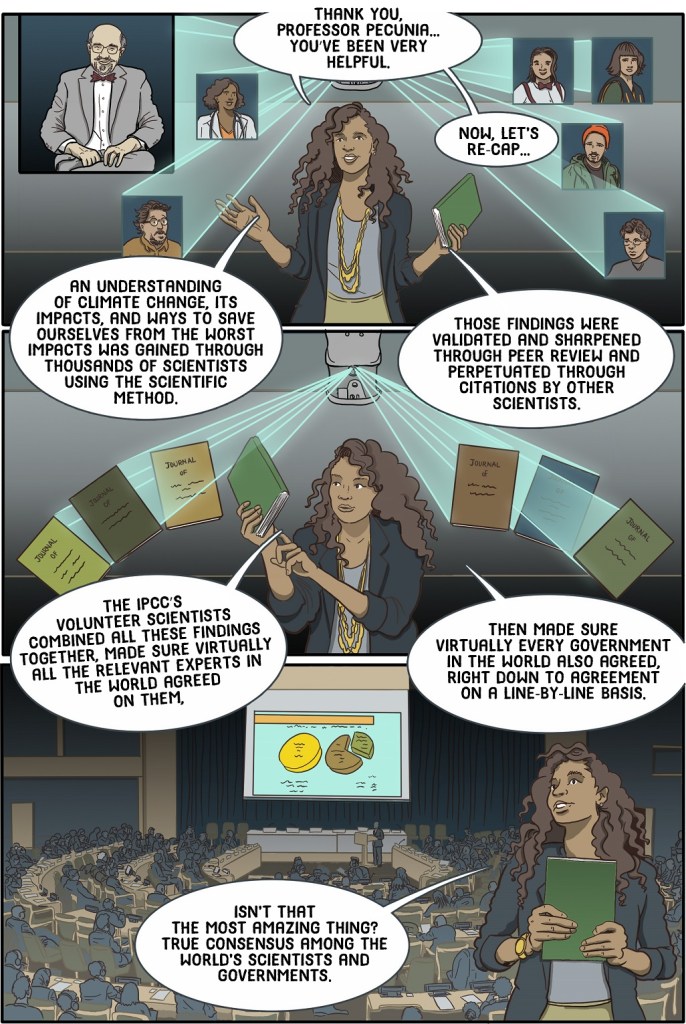
Twenty-fifth online page shows teacher recapping what students have learned.
Dialogue:
Thank you Professor Pecunia.. 
You’ve been very helpful.
Now... let’s recap.
An understanding of climate change, its impacts, and ways to save ourselves from the worst impacts was gained through thousands of scientists using the scientific method.

Those findings were validated and sharpened through peer review and perpetuated through citations by other scientists.

The IPCC’s volunteer scientists combined all these findings together, made sure virtually all the relevant experts in the world agreed on them, THEN made sure virtually every government in the world also agreed, right down to agreement on a line-by-line basis
Isn’t that the most amazing thing?
True consensus among the world’s scientists and governments.
25 of 31
October 1, 2020October 29, 2021

pg28

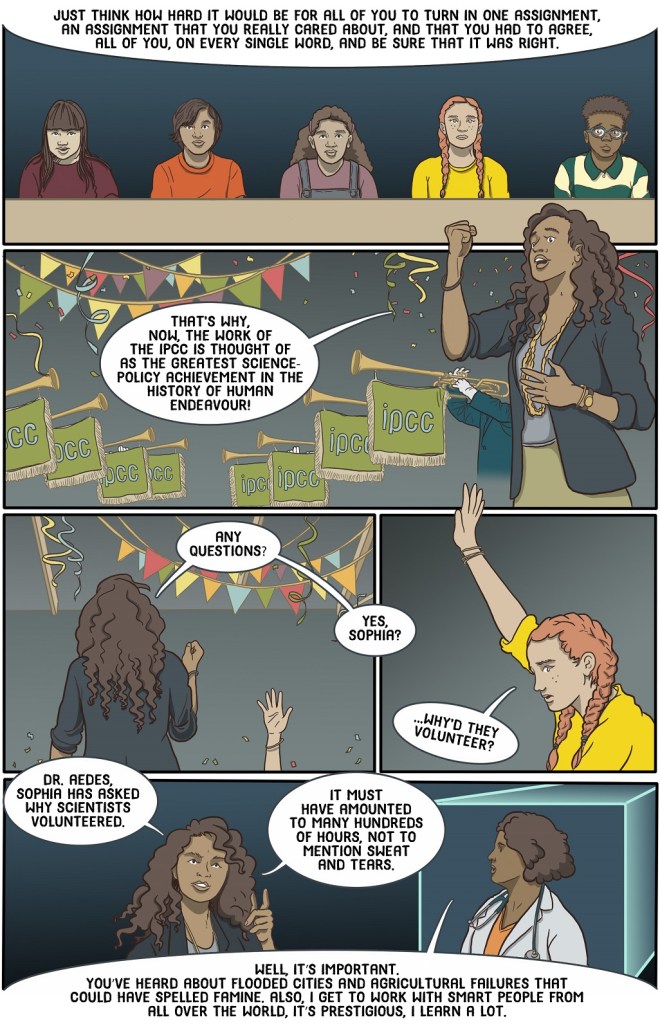
Twenty-sixth online page shows teacher celebrating the amazing achievements of the IPCC then bringing the physician back to answer a student question.
Dialogue:
Just think how hard it would be for all of you to turn in one assignment, an assignment that you really cared about, and that you had to agree, all of you, on every single word, and be sure that it was right.
That’s why now, the work of the IPCC is thought of as the greatest science-policy achievement in the history of human endeavour.
Any questions?
Yes Sophia?
Why’d they volunteer?
Dr. Aedes, Sophia has asked why scientists volunteered.
It must have amounted to many hundreds of hours, not to mention sweat and tears.
Well, it’s important. You’ve heard about flooded cities and agricultural failures that could have spelled famine. Also, I get to work with smart people from all over the world, it’s prestigious, I learn a lot.
26 of 31
October 1, 2020October 29, 2021

Posts navigation

Older posts
Newer posts
How do we know? Because IPCC
  • Subscribe Subscribed
    • How do we know? Because IPCC
    • Already have a WordPress.com account? Log in now.
    • How do we know? Because IPCC
    • Subscribe Subscribed
    • Sign up
    • Log in
    • Report this content
    • View site in Reader
    • Manage subscriptions
    • Collapse this bar
 

Loading Comments...